Table of contents
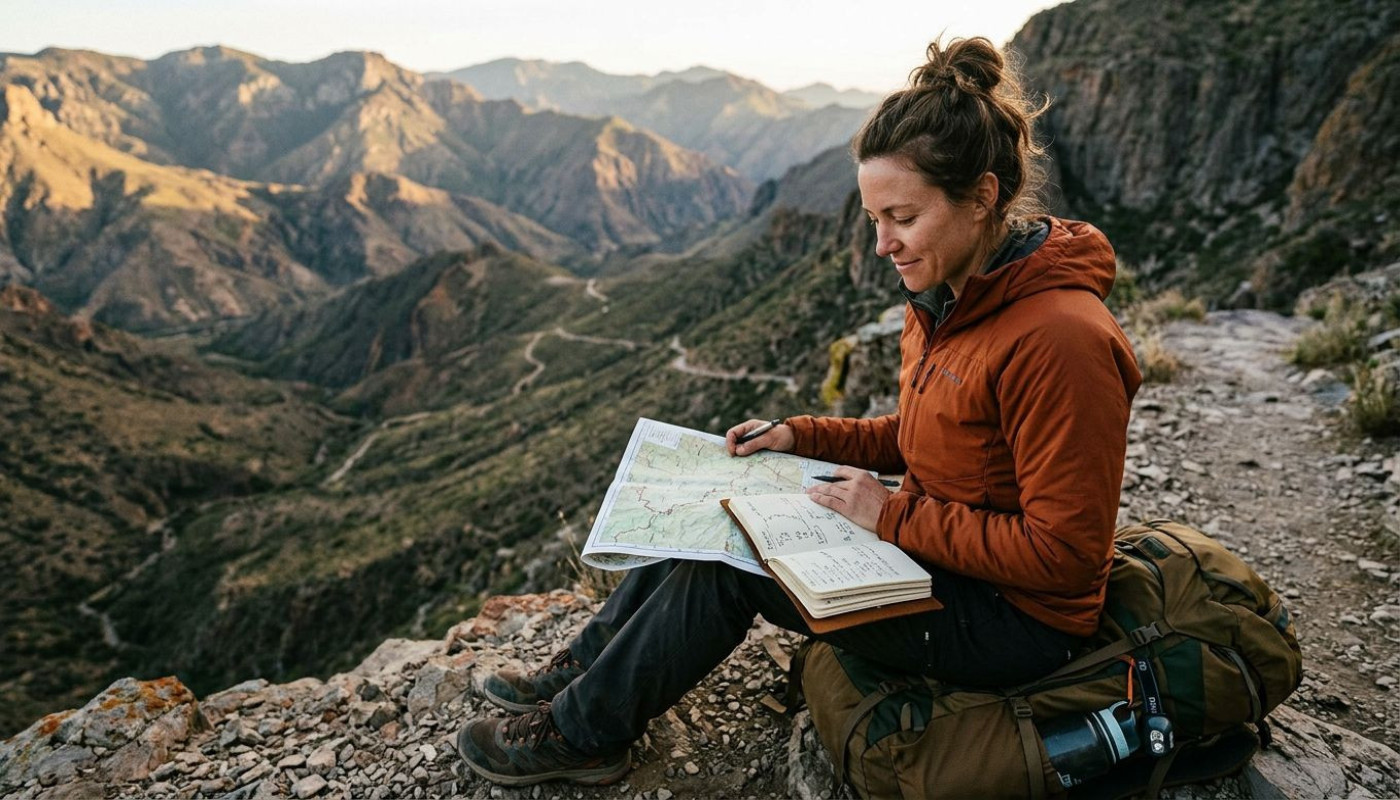
Going solo on the trail has a way of stripping travel down to essentials, weather, water, daylight, and the uncomfortable truth that a “rough plan” is often no plan at all. After several long day hikes and a couple of multi-day routes tackled alone, I started paying attention to the same things mountain guides obsess over: pacing, contingencies, and the quiet math behind a safe, satisfying day. Those lessons travel well, whether you’re mapping switchbacks or stitching together a city break.
Alone on the trail, time gets real
Miss your timing, and everything changes.
On a solo hike, nobody negotiates your schedule for you, there’s no group momentum to hide behind, and the mountain does not care that the view was “too good to leave.” That’s when you learn to plan in hours, not in vibes. Hiking research and mountain-safety guidance converge on a blunt point: most accidents and callouts cluster around late descents, fatigue, and deteriorating conditions, and daylight is often the hard constraint. In the US, the National Park Service routinely stresses that hikers underestimate time and overestimate ability, while search-and-rescue reporting in many regions repeatedly highlights poor planning and late turnarounds as common factors; the exact numbers vary by park and year, but the pattern is consistent enough that rangers keep repeating the same advice season after season.
Translating that mindset to an itinerary means starting with the non-negotiables and working backward, opening hours, last admission times, transit frequency, and the real door-to-door duration, not the optimistic estimate on a map. In cities, the equivalent of “sunset” is the final slot at a museum, the last metro before service changes, or the fact that popular experiences sell out days ahead, and once you miss the window, you’re improvising. The fix is unglamorous but powerful: anchor the day around two or three fixed points, then add flexible filler that can expand or disappear without breaking the plan.
Solo hiking also teaches the value of a turnaround rule, a pre-decided moment when you stop pushing and start returning, even if you feel fine. In travel, the same principle keeps you from turning a long-planned day into an endurance test, especially when queues, heat, or slow service eat into the afternoon. Set a “hard stop” for the farthest point of the day, then plan the return with the same seriousness as the outbound leg, because, as hikers learn quickly, the way back is rarely easier, and tired decision-making is when mistakes pile up.
The best route is the one you can finish
Aspiring itineraries fail on legs, not ideas.
On the trail, the most seductive mistake is designing a route for the version of yourself who never slows down, never gets hungry, and never needs a break. Real bodies disagree. Even experienced hikers plan using pace ranges and elevation gain, because distance alone doesn’t tell the story, and a steep kilometre is not the same as a flat one. Many outdoor planning heuristics build around that reality, from traditional “time rules” to modern GPS-based estimates, yet the core lesson remains simple: create margins, then protect them.
In a city, the same overconfidence shows up as an itinerary that assumes perfect connections, immediate entry, and constant energy. The antidote is to budget friction. Add time for security lines, ticket scans, finding the right platform, and the ten minutes lost when you stop to reorient, because you will. If you’re travelling in a place affected by heat or altitude, the “elevation gain” equivalent is physiological, and it matters, dehydration and heat stress can derail a day far faster than a missed bus. Public health agencies and travel medicine guidance consistently note that high temperatures raise risk, especially when people underestimate water needs and overexert, which is exactly what tourists do when they try to see everything.
Practical planning becomes almost mechanical: pick one “summit” experience each day, something you’ll be disappointed to miss, then build the rest around it. Aim for a realistic number of major stops, and treat meals and rest as fixed infrastructure, not optional rewards. On my best solo hikes, I planned breaks before I needed them, and I packed snacks I would actually eat when tired. In travel, that means deciding where you’ll pause, café, shaded park, quiet neighborhood, and when you’ll reset, because the quality of the second half of the day depends on it.
It’s also where you start thinking like a guide: what’s the easiest point to cut the loop short if something slips, what’s the nearest safe exit, and what’s Plan B that still feels like a good day. If you map those alternatives in advance, you don’t waste energy bargaining with yourself on the fly, and you avoid the classic spiral of “we’re already here, let’s just add one more.”
Good planning leaves room for the unexpected
Spontaneity needs structure to thrive.
Solo hiking forces you to respect uncertainty, weather turns, trails close, water sources run dry, and a minor blister can become the dominant fact of the day. That’s why experienced hikers carry redundancy, a light, a layer, a backup route, and why safety organizations emphasize essentials and contingency planning. In travel, uncertainty shows up differently but hits just as hard: strikes, roadworks, a museum closure, a sudden downpour, or simply the reality that the place you wanted to visit is far better enjoyed slowly than rushed through.
The most effective itineraries I’ve built, for myself and for friends, use a two-tier structure. Tier one is fixed and ticketed, timed entries, reservations, anything that has a penalty for missing it. Tier two is modular, neighborhoods to wander, viewpoints, markets, and low-stakes stops that can slide earlier or later. This is the city version of carrying a spare layer, you might not need it, but when conditions change, you’re grateful it’s there.
That approach is also kinder to budgets. On hikes, you learn to ration resources, and in cities the scarcest resource is often money at the wrong moment, a taxi because the last train is gone, a pricey meal because you didn’t plan a simple alternative. Building buffers means setting aside a contingency amount each day, not enormous, but real, so that an unexpected cost doesn’t force you into bad choices. Data from major travel industry surveys repeatedly show that travellers are more price-sensitive than they admit, yet overspending often comes from small, reactive decisions, not big splurges.
And then there’s safety. Solo hikers share their route and expected return time, because if something goes wrong, the clock matters. Travellers should do the same at a basic level: keep key addresses offline, know how you’ll get back after dark, and avoid designing a day that ends in a logistical scramble. If you’re planning a first-time trip to a large, complex capital, building a coherent plan can be the difference between feeling overwhelmed and feeling in control, and if you want a practical starting point for structuring days, transport, and must-sees, https://www.mexicocity-trip.com lays out options that make it easier to turn “I’ll figure it out” into an itinerary you can actually execute.
My checklist, from trailhead to city streets
Planning works when it’s repeatable.
After enough solo miles, I stopped treating planning as inspiration and started treating it as a checklist, because checklists reduce errors when you’re tired, distracted, or overconfident. Aviation learned that long ago, and hiking quietly confirms it. For travel, the checklist isn’t about sucking joy out of the day, it’s about freeing your attention for what matters, the sound of a neighborhood waking up, the conversation at a counter seat, the unexpected courtyard you’d have missed if you were panicking about the next stop.
Here’s what repeatedly makes the difference. First, define the day’s purpose in one sentence, “architecture and food,” “parks and museums,” “markets and street life,” then choose the single non-negotiable booking if you need one. Second, calculate the “true start,” the moment you can realistically leave, after breakfast, after getting ready, after the first transit connection, and plan from there rather than from a fantasy 8 a.m. departure. Third, plot distances in time, including entry and exit time, because attractions often have hidden minutes, stairs, security, gift shops, and the walk to the actual exit you need.
Fourth, pre-decide two rest points and one bailout option. The rest points can be simple, a café near your second stop, a park bench near the river, but putting them on the map stops you from drifting into exhaustion. The bailout can be a neighborhood you can enjoy without tickets, a shorter loop, or a return-to-hotel reset, and you should treat it as a legitimate choice, not a failure. Fifth, set a food rule that prevents the worst outcome: eating poorly because you’re too hungry to choose. On solo hikes, I learned to eat before hunger becomes urgent, and in cities I now plan at least one meal with a known address, plus one flexible snack stop to smooth the day.
Finally, end the day on purpose. Hikers don’t just reach a viewpoint, they plan how to get down. In travel, choose an “evening landing,” a dinner area you can reach easily, a short walk back, or a simple transit line, and avoid ending in the farthest, most complicated point of the map unless you’ve planned the return. That single habit, designing the descent, is what turns a packed itinerary into a pleasant one, and it’s what keeps tomorrow from starting with fatigue.
A simple way to book it
Reserve early, and keep slack.
Lock in timed-entry tickets and popular dinners several days ahead, then budget daily buffers for queues and transit, and keep a contingency line for taxis or last-minute changes. Check city passes and official discounts, and watch for free-entry hours. A workable plan is one you can finish, comfortably, on your terms.
On the same subject
What Seasoned Travelers Wish They Knew Before Their First Journey

Impact of Visitor Entry Tax on Bonaire's Economy

What is the purpose of tourism agencies?

Travel to Dubai: what are the most beautiful places to visit?

Travel to England: what are the most beautiful places to visit?

Tourist attractions to visit during a trip to Brazil
